
Inside the Mind of Your Waiter: What They Wish You Knew
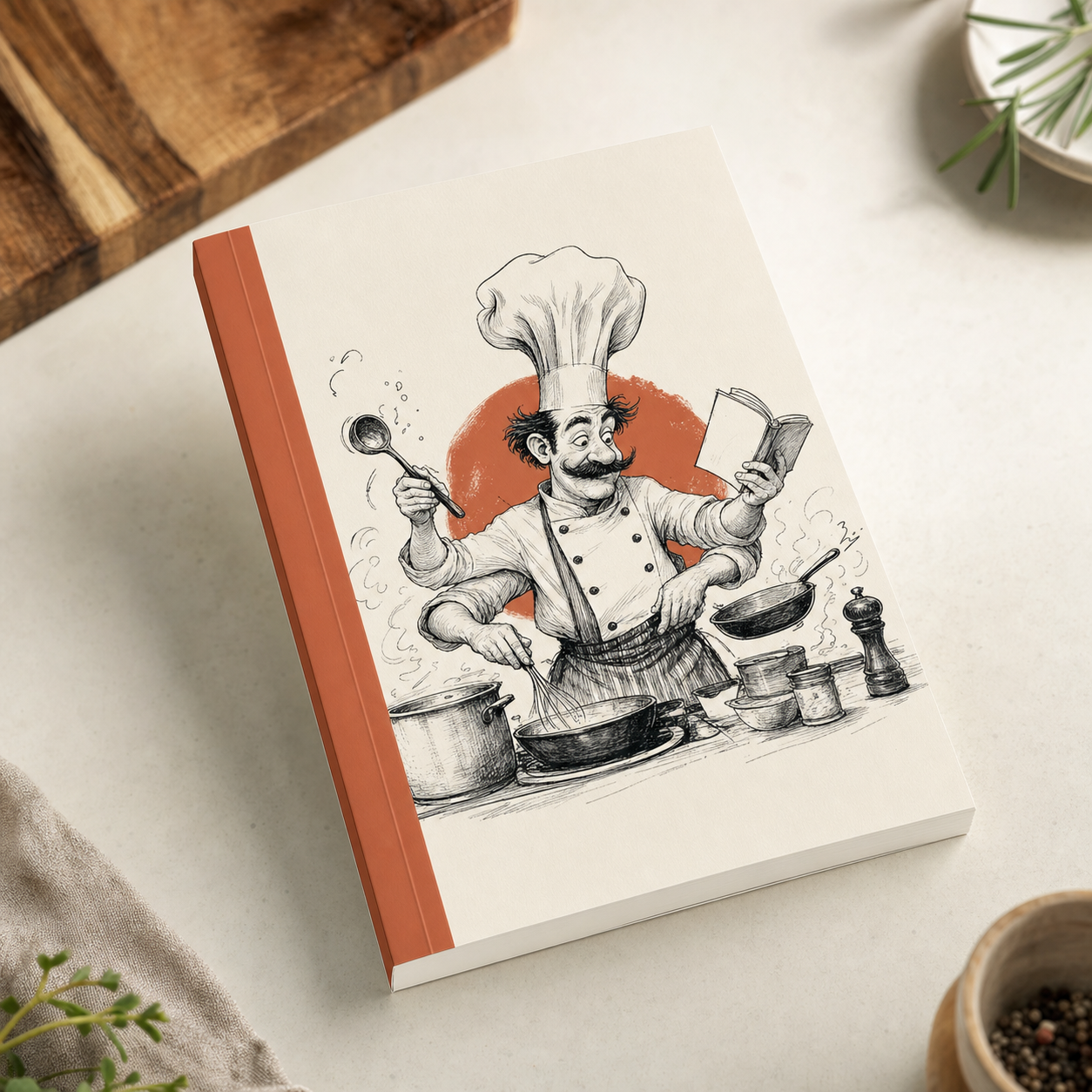
If the restaurant floor had a thought bubble floating above it, the content would surprise you. Your waiter is a professional. They smile, they remember your table number, they explain the specials with enthusiasm they did not have at the start of the shift. But behind that composure is a running interior monologue that tells a rather different story. These are waiter funny stories you will not find on the menu — honest, affectionate, and almost entirely accurate.
- The classic guest behaviours that define every shift
- What "almost ready" means in real time
- The art of the split bill calculation
- Why the waiter knows your dietary requirements better than you do
- A book that captures all of this perfectly
- FAQ for guests and servers
The "Almost Ready" Clock
Every waiter learns the "almost ready" scale in the first week. It has five settings:
- Almost ready (arriving now)
- Almost ready (five minutes)
- Almost ready (I have not opened the menu)
- Almost ready (I am deciding between two things I will not order)
- Almost ready (I wanted to tell you about my dietary requirements before I commit to anything)
The waiter's job is to process which setting the table is on, hold that assessment with minimal visible effort, and continue attending to seven other tables who are all also almost ready in their own particular way. This is not a complaint. It is simply the arithmetic of a busy floor.
What guests often do not realise is that the waiter is not waiting in idle mode during these intervals. They are tracking table turnover, resetting cleared covers, carrying out three small tasks that need doing before the kitchen closes, and calculating whether the reservation in the corner will be seated on time. The "almost ready" window is filled with invisible activity.
The Dietary Declaration
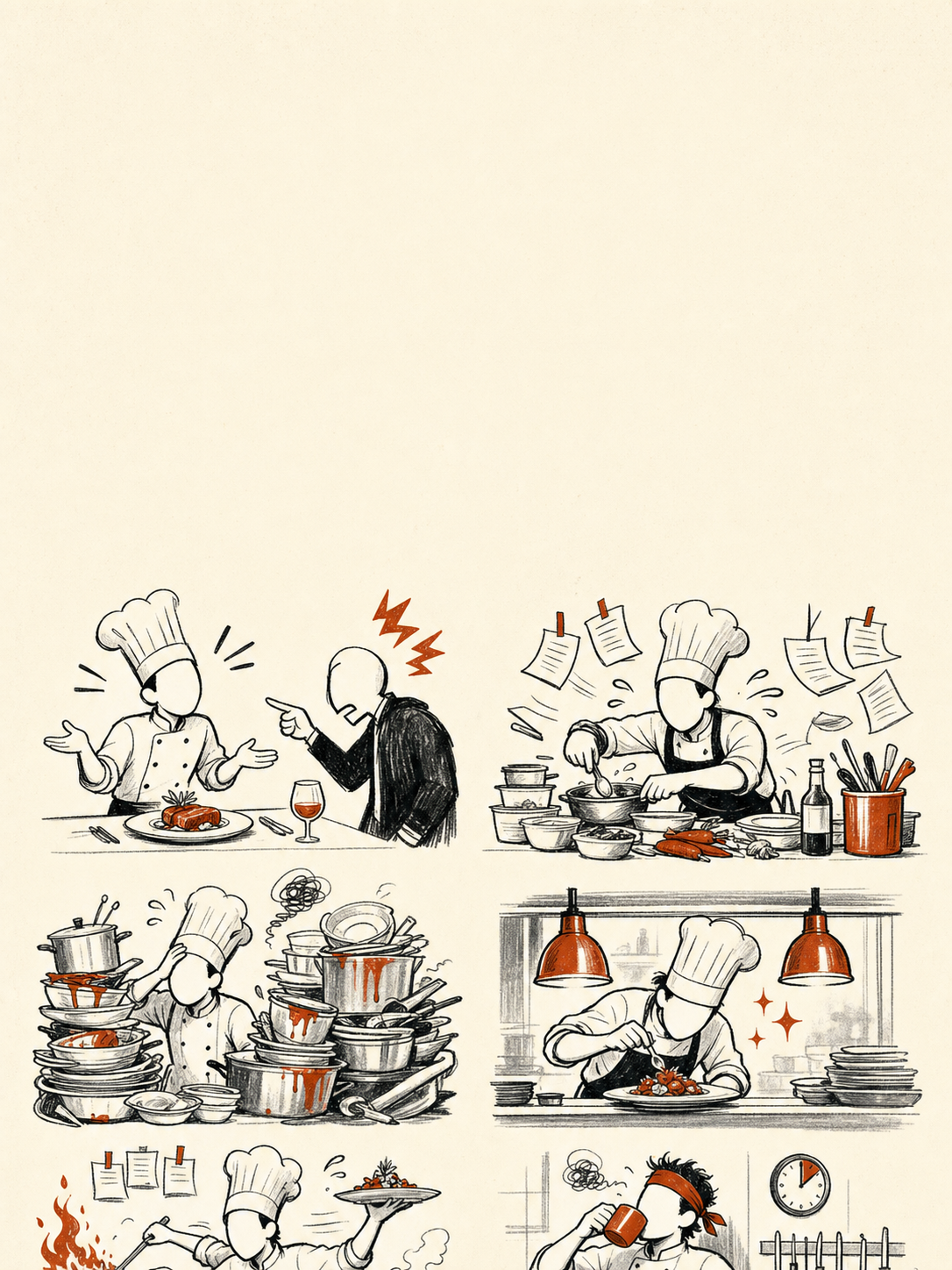
Here is something the restaurant industry rarely discusses openly: waiters remember your dietary requirements more reliably than you do. This is not because they have superhuman memory. It is because they have to — not just for your comfort, but for the smooth operation of a kitchen that does not welcome last-minute amendments once the food is in the pan.
The dietary landscape has expanded considerably over the years. Servers now navigate a spectrum that runs from genuine medical necessity through strong preference to dietary identity to experimental abstinence. This is handled with equal care across the board, because the one time you assume something is a preference rather than a requirement is the one time it wasn't.
What the waiter often wishes guests understood: the more specific the information delivered upfront, the better the outcome. "I don't eat X" is infinitely more useful than "I'm sort of doing this thing where I'm cutting back on X but if there's a bit in the sauce it's probably fine but ideally not." The kitchen needs a clear brief.
The Split Bill Calculation
There is a moment in any group dinner when someone mentions splitting the bill and the waiter undergoes a rapid internal assessment. Not of the maths — the maths is handled by the machine — but of the social dynamics that are about to unfold.
The table of six divides into predictable types. There is the person who had only a starter and tap water and is already doing loudly visible mental arithmetic. There is the person who had two glasses of wine and appears genuinely surprised by this information. There is the person who has extracted their card and is visibly performing readiness. There is the person explaining that they could not eat the main course because of the thing they mentioned earlier and therefore—
The waiter stands through all of this with the calm neutrality of a referee at a chess tournament. They will run the cards. They will split the bill correctly. They will do so without commentary, without visible emotion, and without the reaction their inner monologue is generating with some enthusiasm.
What the Waiter Actually Wants from You
There is a version of this article that exists as a complaint list. This is not that version. Service staff generally like people. What follows is less a list of grievances and more a brief translation guide.
"Is everything all right with your meal?" — This is a real question. Saying "fine, thanks" and then mentioning at the end that actually you were not entirely happy is information that arrives too late to be useful to anyone.
Catching the waiter's eye. The raised hand works. The expectant stare directed at the back of the waiter's head while they are carrying plates in the other direction is less effective. Waiters are not psychic, though the good ones have something that resembles it.
Patience with the kitchen. The waiter did not cook the food. They relayed your order accurately and will advocate for you if something goes wrong. They are not the bottleneck. They are the interface. Directing kitchen frustrations at the interface is like shouting at the printer when the server is down.
The Book Worth Gifting
“The Hard Life of a Waiter” by Nick Sauer
"The Hard Life of a Waiter" by Nick Sauer is the only book that takes restaurant work seriously by not taking it seriously at all. From split bills to dietary inventions, Sauer documents the quiet heroism of service staff. The book every server passes around the staff room.
If you have read this far and found yourself alternately amused and mildly self-aware, this book is the logical next step. It does for restaurant service what a very good documentary does for its subject: it makes you see something familiar in an entirely new way, with considerably more warmth and laughter than you expected.
Related Reads
- Funny Gifts for Waiters and Restaurant Staff (Tested by Servers) — If reading this has put you in the mood to buy a thoughtful gift for someone who works the floor, here is the guide that actually helps.
- The Server's Survival Kit: Gift Ideas That Actually Help — Practical gift ideas for the servers in your life.
- What Your Chef Really Thinks About Your Order — The kitchen side of the same story. Equally illuminating, similarly dry.
Frequently Asked Questions
Do waiters really think these things?
The observations in this article reflect the kind of dry, practical humour that genuinely circulates in restaurant break rooms. Service staff are professionals — but they are also human beings with rich interior monologues and very accurate memories of specific table behaviours.
Why do servers seem so calm when things go wrong?
Because reacting visibly to chaos makes the chaos worse. The calm is professional maintenance. Most experienced servers have encountered nearly every possible table scenario and have a practised response to each.
What is the best way to treat your waiter?
Be clear about your order, communicate dietary requirements upfront, make eye contact when you want to signal you are ready, and say thank you at the end. None of this is complicated. All of it makes a material difference.
Are waiter stories ever published anywhere?
"The Hard Life of a Waiter" by Nick Sauer is probably the most accurate and entertaining printed version of what those break room conversations actually sound like.
Is restaurant work as hard as it looks?
Harder than it looks from the table side, and funnier from the inside than any guest realises. The job combines physical endurance, social skill, rapid problem-solving, and an unusual tolerance for ambiguity.
Pin This Article
- Pin 1 — What Your Waiter Is Actually Thinking Right Now: From "almost ready" to split bills, here is the interior monologue your server is professionally prevented from sharing. Warm, dry, and entirely accurate.
- Pin 2 — Waiter Confessions: The Truths No One Tells You: These waiter funny stories are the ones that circulate in break rooms, not dining rooms. Save this if you work in service or eat in restaurants.
- Pin 3 — Inside the Mind of a Server — Funny and True: A behind-the-notepad look at what experienced servers observe, calculate, and quietly file away during every shift.
The waiter in front of you is doing at least six things simultaneously. The smile is real — it is also practised. And behind it is a running monologue that, if published, would probably shift a significant number of copies. Fortunately, something like that already exists.