
What Your Chef Really Thinks About Your Order (A Kitchen Confession)
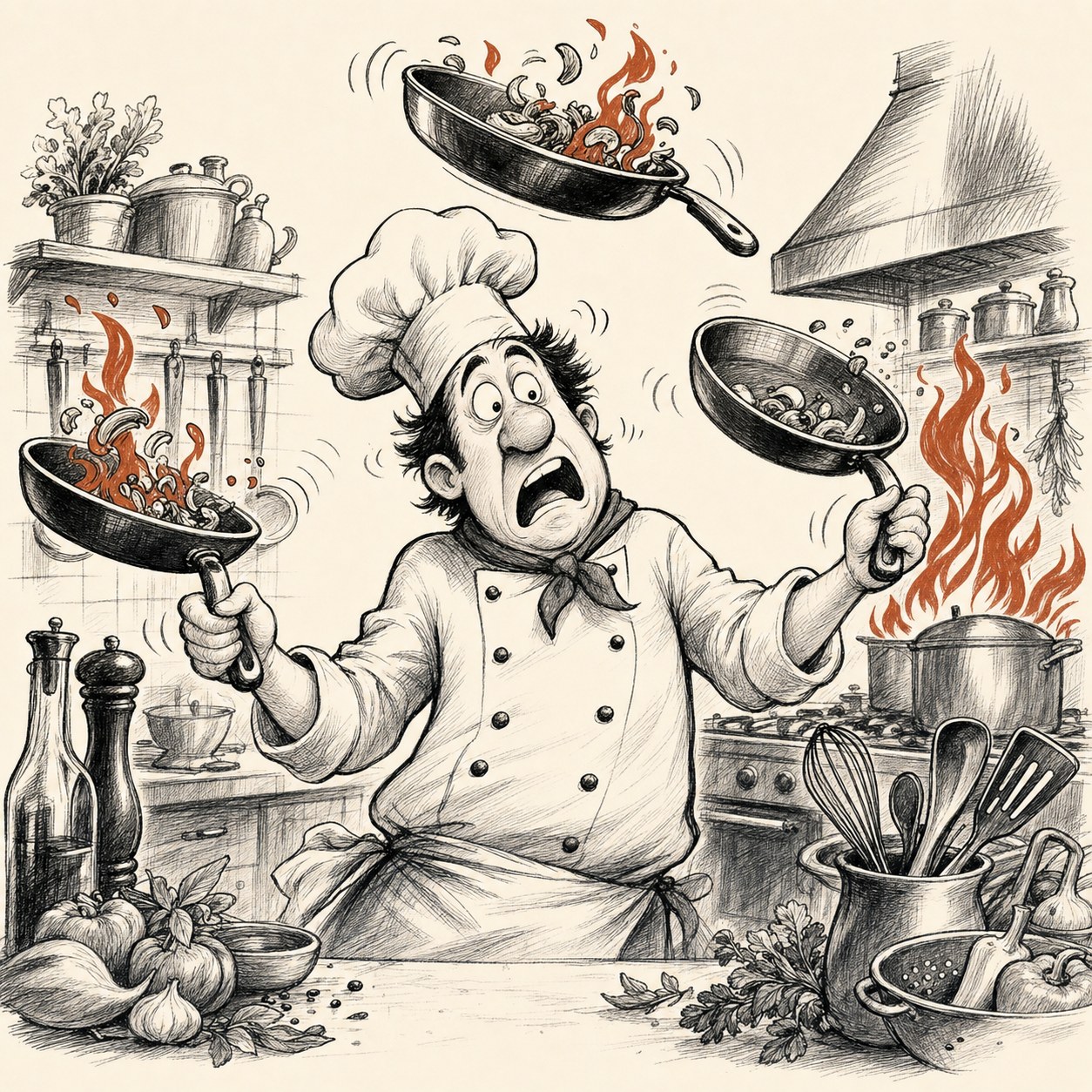
Your order has been placed. It has made its way from the front of house to the kitchen, where it is now being considered by a person who has been on their feet since 11 AM, has burned two fingers and forgotten to eat lunch, and is simultaneously managing six other tickets. What do they think of it? These are the kitchen humor stories from inside the brigade — told with the dry warmth that only comes from having actually stood at the pass and made the calculation. No chefs were harmed in the writing of this article. Several were consulted.
What You'll Find in This Article
- What chefs actually think about common customer requests
- The substitution conversation (from both sides)
- The table that arrives at 9:55 PM
- The allergy announcement after ordering
- Why kitchens run on dark humour
- A book recommendation from inside the world
- FAQ on chef psychology
- Reasonable substitutions happen without drama — it's the architecturally impossible ones that require negotiation
- The late dietary announcement triggers a professional reset, not resentment
- The table at 9:55 gets the same food as the table at 7 PM
- Dark humour in kitchens is functional — it's the glue that holds a team together under pressure
The Substitution Request
Let's begin here, because this is where the most consistently interesting interior monologue happens.
You would like the salmon, but without the capers, and with the sauce from the duck, and could the spinach be replaced with something green but not bitter, and also you're not sure about caperberries but you definitely don't like capers, so if there's any ambiguity, please leave them all out, including anything related to the brine.
The chef hears this. The chef processes this. The chef has feelings about this. None of those feelings are anger. A reasonable substitution — changing a protein, removing an ingredient — is a completely normal part of service. It happens every night and gets handled without drama.
What the chef is actually doing is a rapid feasibility calculation: Can we make this work? Does it affect the other components of the dish? Will the result still represent what this kitchen does? If yes, the modification happens, the ticket goes up, and nobody thinks about it again. The requests that land in a different category are the ones that are architecturally confusing — essentially a different dish, designed at the table, assembled from components not designed to work together.
The chef's actual thought, in most cases, is: "Right. Let me figure out if this works." The answer, more often than not, is that it does.
The Dietary Announcement After Ordering
"Actually, before I forget — I'm pescatarian."
The timing of this announcement varies. Sometimes it arrives at the moment the food does. There is a specific version that happens after the menu has been discussed with the server in detail, the order placed, the kitchen notified, and the food is seven minutes from the pass.
What the chef thinks: assessment, acceptance, practical recalculation, and a brief, silent acknowledgment that this is not the first time this has happened and will not be the last. What you are witnessing when your food arrives correctly despite the late announcement is not magic. It is the accumulated expertise of a team that has developed the internal systems to handle all of them. This is what professionalism in a kitchen actually looks like.
The Table That Arrives at 9:55 PM
The restaurant closes at ten. The table knows this. They arrived at 9:55, they were seated, they were given menus, and they are now debating the tasting menu. The kitchen is aware of this table.
What the kitchen actually does is continue to operate. The clean-down in progress is paused. The items being put away go back out. The team that was beginning to relax extends its focus. Because that's the job. The table at 9:55 receives the same food as the table at 7 PM, cooked with the same care, presented with the same standard. The dark humour about this table is reserved for after service. During service, it doesn't exist.
Why Kitchens Run on Dark Humour
The kitchen is a high-pressure environment with unusual hours, physical demands, and a continuous requirement to produce flawless results regardless of what's happening around you. The humour that emerges from kitchen culture is a direct product of the pressure. It's how the team bonds. It's how the absurd is metabolised. It's how a person survives a Saturday service that went sideways at 7:30 and didn't recover until 9:45.
If you've ever eaten at a restaurant and felt that the staff seemed to have an in-group warmth you couldn't quite access, you were right. The kitchen humour is the glue. The dry exchange over the pass is shorthand for a relationship built under pressure. It's a language, and the book at the end of this article speaks it.
The Book Worth Gifting
"The Hard Life of a Chef" by Nick Sauer is a love letter to anyone who's ever worked the line. Sauer captures the heat, the chaos, and the dark humour that holds kitchens together. Equal parts confession and tribute, it's the gift every cook secretly wants.
This is the book that kitchen people hand around. The one that gets left in the break room with a post-it note that says "read this." If you know someone who has worked in kitchens, this is the book.
Related Reads
- Best Funny Gifts for Chefs and Cooking Enthusiasts — the full gift guide for the cook in your life
- Gift Ideas for the Boyfriend Who Lives in the Kitchen — when the chef is also a partner
- Retirement Gifts for Chefs: Books That Honor the Apron — when the occasion is a milestone
Frequently Asked Questions
Do chefs actually get annoyed by substitution requests?
Not usually. A reasonable substitution is a routine part of service. What chefs find genuinely challenging are requests that require fundamentally redesigning a dish at the table — not because they're unwilling, but because the result may not represent the kitchen at its best. Most modifications happen without drama.
What does a chef think when you send food back?
It depends on why. Food sent back because of a genuine error is taken seriously and fixed without resentment. Food sent back because of a preference the customer is expressing through the meal creates a different calculation. The professional response in both cases is the same: resolve it.
Is late-night service actually difficult for kitchens?
Yes, in the sense that it requires extending focus past the point where the natural wind-down has begun. Whether a late table is served graciously depends almost entirely on the professionalism of the kitchen and the culture the head chef has built.
Why do kitchen workers have such a specific sense of humour?
Because they developed it under specific conditions. Kitchen humour is functional — it bonds teams, metabolises stress, and makes high-pressure situations survivable. The dry wit, the dark observation, the perfectly timed joke over the pass — these are professional skills in a kitchen.
Is kitchen culture as shown in food media accurate?
Partially. Food media tends toward the dramatic. Real kitchen culture contains all of that, but also much more warmth and solidarity. Books tend to capture this better than television.
What's the best book about kitchen culture?
For humour and observation that captures the texture of kitchen life accurately, "The Hard Life of a Chef" by Nick Sauer is among the best — precise, warm, and funny in a way that comes from genuine familiarity with the world.
Pin This Article
Pin 1: What Your Chef Really Thinks About Your Order — A warm, honest look at what chefs actually think about your order, substitution request, and the table that arrives ten minutes before close.
Pin 2: Kitchen Confessions: Humor Stories From Inside the Brigade — What really goes through a chef's mind during service, told with dry warmth that only comes from having lived it.
Pin 3: A Chef's Honest Thoughts on Your Substitution Request — It's not what you think. Plus the book that captures the heat, the chaos, and the dark humour.
The next time you sit down in a restaurant and place your order, you'll know slightly more about what's happening on the other side of the pass. The calculation being made. The professional reset that follows the unusual request. The absolute, unspoken commitment to sending a plate out that meets the standard. It's a remarkable thing to watch, when you understand what you're watching.